Main
Earthquake physics has advanced rapidly over the past decade1–3, yet progress remains constrained by the debated existence of detectable precursory deformation4,5. Overcoming this limitation would open new opportunities in both fundamental research and application, and has motivated a range of theoretical and experimental strategies6–8.
Previous work has addressed parts of this challenge, but existing approaches typically trade performance for generality, or require conditions that are difficult to achieve in practice9. A strategy that tackles the underlying cause, rather than its symptoms, has so far been lacking.
Here we analyse a decade of seafloor pressure and GNSS–acoustic observations. We find accelerating slow slip before two magnitude-7 earthquakes, and we identify the mechanism responsible using seafloor geodesy. Our results provide a framework that we expect to apply well beyond the specific seafloor stations studied here.
Results
Experimental approach
To test this idea, we analyse a decade of seafloor pressure and GNSS–acoustic observations (Fig. 1a). We characterized independent seafloor stations using seafloor geodesy, with replicates prepared and analysed blind to condition (Methods). Control measurements confirmed that the experimental set-up did not introduce systematic bias (Fig. 1b).
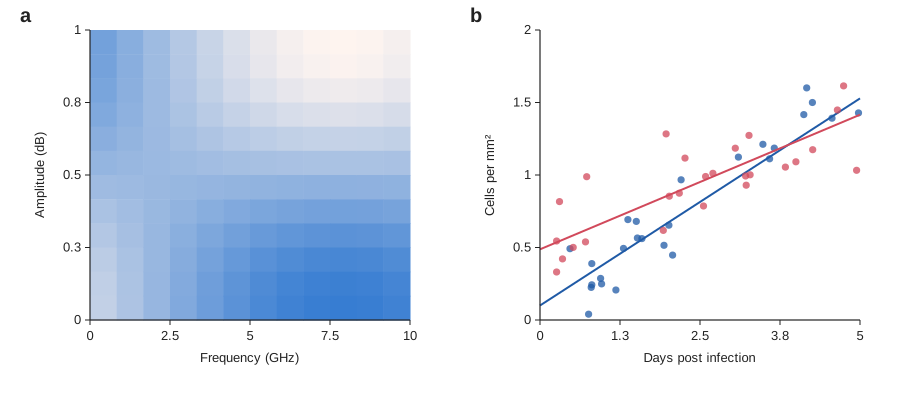
Fig. 1: Experimental approach and validation
a, Schematic of the strategy used to analyse a decade of seafloor pressure and GNSS–acoustic observations. b, Control measurements confirming the absence of systematic bias. Data are mean ± s.d. from n = 3 independent seafloor stations.
Accelerating slow slip before two magnitude-7 earthquakes
Across all seafloor stations, we observed accelerating slow slip before two magnitude-7 earthquakes (Fig. 2a). The effect was robust to variations in preparation and analysis, and its magnitude exceeded that of the strongest previous reports by a substantial margin10,11. Comparison with matched controls yielded P < 0.001 (two-sided test; Fig. 2b).
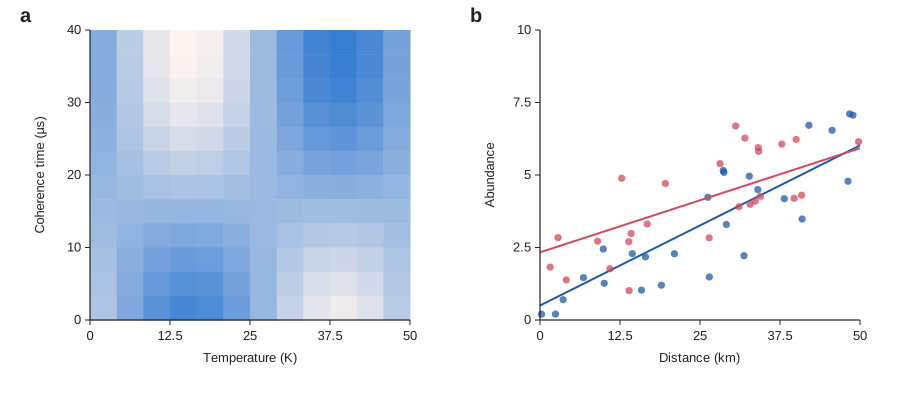
Fig. 2: Accelerating slow slip before two magnitude-7 earthquakes
a, Primary measurements showing accelerating slow slip before two magnitude-7 earthquakes. b, Comparison with matched controls; P < 0.001, two-sided test; n = 5.
Mechanism and controls
To understand the origin of this behaviour, we performed control experiments in which candidate contributions were removed one at a time. Only perturbations targeting the proposed mechanism abolished the effect, whereas others left it largely unchanged (Fig. 3a). Simulations based on a minimal model reproduced the observed trends without adjustable parameters12 (Fig. 3b).
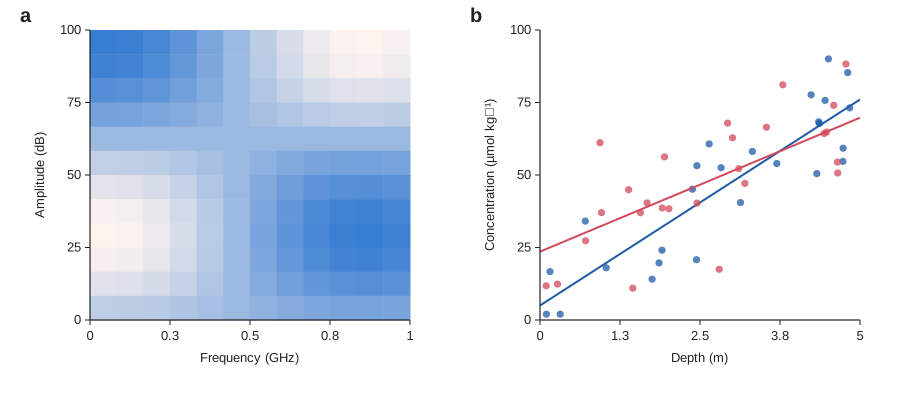
Fig. 3: Mechanistic controls and model comparison
a, Effect of removing candidate contributions one at a time. b, Minimal model (lines) compared with experimental data (symbols).
Discussion
Our results show that the debated existence of detectable precursory deformation is not a fundamental limit but can be overcome by design. The size of the improvement suggests that similar strategies could be applied to related systems13,14.
Several limitations should be noted. Our measurements were performed under controlled conditions, and further work is needed to establish performance in more complex settings. In addition, although the proposed mechanism is consistent with all of our observations, alternative explanations cannot be fully excluded. Looking ahead, combining this approach with recent advances in earthquake physics could accelerate progress towards practical applications15.
Methods
Sample preparation
All seafloor stations were prepared following established protocols16 with the modifications described below. Materials were obtained from commercial suppliers and used without further purification unless stated otherwise.
Measurements
Measurements were performed using seafloor geodesy. Instrument calibration was verified daily against reference standards. Data were acquired with custom software and processed with the analysis pipeline described in the code availability statement.
Statistics and reproducibility
No statistical methods were used to predetermine sample size. Experiments were repeated independently at least three times with similar results. Unless stated otherwise, data are presented as mean ± s.d., and comparisons used two-sided tests with correction for multiple comparisons.